We’re facing a lot of changes in cosmetic law. Commission Regulation (EU) 2026/909 of 27 April 2026 introduces changes to the use of Benzyl Salicylate, Citral, Triphenyl Phosphate, Ammonium Silver Zinc Aluminum Silicate, aluminum, water-soluble zinc salts, acetylated vetiver oil, HC Blue No. 18, HC Red No. 18, HC Yellow No. 16, Hydroxypropyl-p-phenylenediamine and its dihydrochloride salt, and DHHB. This post will be quite long, so sit back and enjoy a cup of coffee or tea 😊
Changes to the use of 2 allergens – Benzyl Salicylate and Citral
Benzyl Salicylate and Citral are well-known fragrance ingredients in cosmetics that were previously regulated as standard allergens. They are included in Annex III of Regulation 1223/2009, requiring consumers to be informed of their presence when concentrations exceed 0.001% in leave-on products and 0.01% in rinse-off products. From now, additional restrictions on the use of these substances will apply.
Concerns have been raised regarding benzyl salicylate’s potential endocrine-disrupting properties. Therefore, it was assessed by the SCCS, which established safe levels for its use in specific cosmetics. Entry 75 in Annex III will therefore be amended, adding the following product categories with maximum permissible concentrations of Benzyl Salicylate:
- a) Fragrance products (hydroalcoholic and non-hydroalcoholic, spray and non-spray) – C max. = 4%;
- b) Rinse-off skin and hair products (except shower gel/bath products) – C max. = 0.5%;
- c) Shower gel/bath products – C max. = 1.3%;
- d) Leave-on skin and hair products (nonspray/non-aerosol) (except body lotion) – C max. = 0.5%;
- e) Leave-on hair products (sprays/aerosols) – C max. = 0.5%;
- f) Body lotion – C max. = 0.7%;
- g) Face make-up and make-up remover products – C max. = 0.2%;
- h) Oral products – C max. = 0.004%;
- i) Deodorant products (spray/aerosol) – C max. = 0.91%.
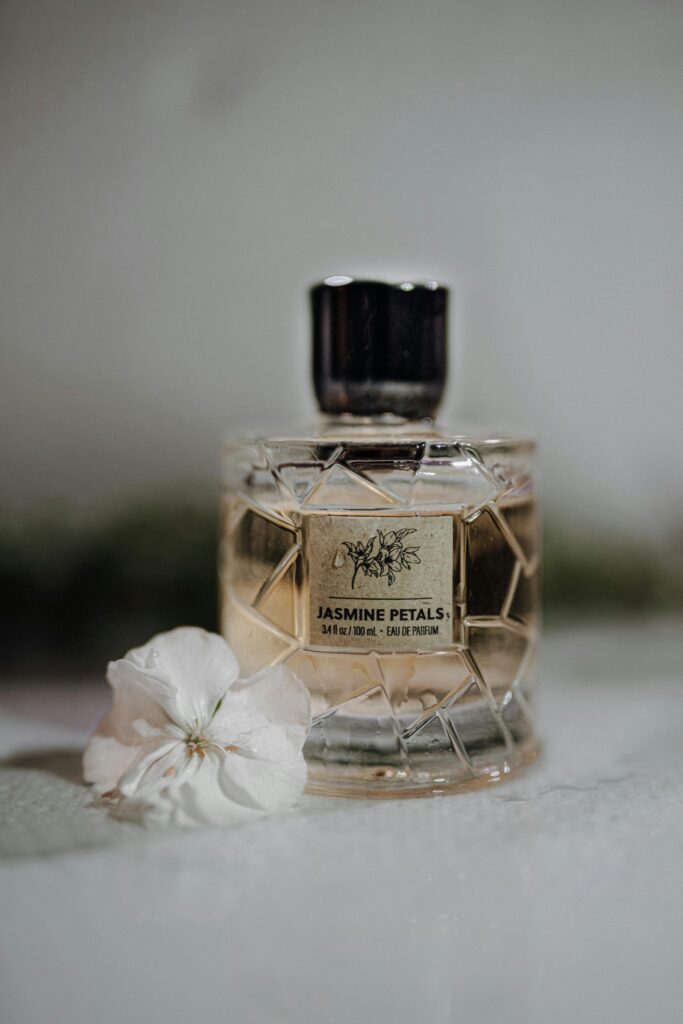
Citral (item 70, Annex III) has been subject to additional restrictions on use due to its relatively high sensitization potential. Therefore, regulations have been added for this substance regarding its use in such cosmetics as:
- a) Lip makeup products, lipsticks, lip balms – C max. =0.11%;
- b) Deodorants and antiperspirants – C max. =0.032%;
- c) Eye products, face make-up, and make-up remover – C max. =0.65%;
- d) Fragrance products (hydroalcoholic and non-hydroalcoholic, spray and nonspray) – C max. = 0.6%;
- e) Leave-on skin products (except lip products, deodorants and antiperspirants, fragrance products, eye products, face make-up and make-up remover) and nail product – C max. =0.15%;
- f) Oral products – C max. =0.35%;
- g) Leave-on hair products – C max. =1.2%;
- h) Skin and hair rinse-off products – C max. =1.2%;
- i) Leave-on products for the anogenital area (baby wipes and intimate wipes) – C max. =0.063%.
Triphenyl Phosphate as a new prohibited substance
Triphenyl Phosphate was previously not regulated by cosmetics law and it was used as a plasticizer to soften or elasticize synthetic polymers. Due to its endocrine-disrupting properties, as well as insufficient safety information and potential genotoxicity, the SCCS issued a negative opinion for this ingredient. Triphenyl Phosphate will therefore be added to the list of prohibited substances (Annex II, entry 1752).
Changes in the Use of Ammonium Silver Zinc Aluminum Silicate
Silver zinc zeolite (INCI: Ammonium Silver Zinc Aluminum Silicate) is listed as a prohibited substance in cosmetic products (entry 1597, Annex II) due to its classification as a “reproductive toxicant category 2.”
However, the cosmetics industry has taken defensive measures to ensure the safe use of silver zinc zeolite as a preservative in cosmetic products, as the number of available cosmetic preservatives is drastically decreasing. The SCCS has confirmed that this substance is safe at a maximum concentration of 1% in spray deodorants and powder foundations, provided that the silver content of the silver zinc zeolite does not exceed 2.5%.
Therefore, Ammonium Silver Zinc Aluminum Silicate will be added to the list of preservatives permitted in cosmetic products (Annex V, entry 61), where it can be used at a maximum concentration of 1% in:
- a) Spray deodorants,
- b) Powder foundations.
Additional restrictions include the requirement for the silver content in Ammonium Silver Zinc Aluminum Silicate, which cannot exceed 2.5%. So, we have a small success, as we have obtained a new preservative 🙂
In turn, entry 1597, Annex II, will read: Silver zinc zeolite with the exception of silver zinc zeolite under the conditions set out in entry 61 in Annex V.
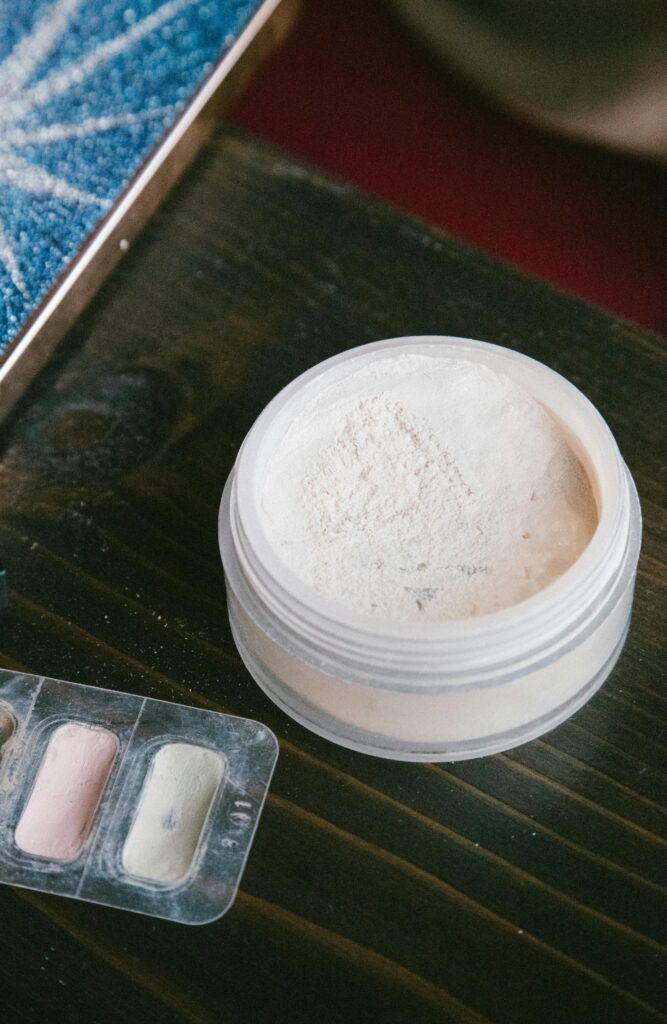
Aluminum and aluminum-containing ingredients
The time has also come for new regulations on the use of aluminum and its compounds in cosmetics. They perform a variety of functions in cosmetics, from antiperspirants and rheology modifiers to colourants. Currently, Regulation 1223/2009 already lists various aluminum-containing ingredients: in entries 34, 50, 189, 190, and 192 of Annex III; entries 117, 118, 119, 121, 131, and 150 of Annex IV; and entry 27a of Annex VI.
The new entry will be entry 379 in Annex III: Aluminium containing ingredients with the exception of those listed in entries 34, 50, 189, 190 and 192 of Annex III, in entries 117, 118, 119, 121, 131, 150 of Annex IV, in entry 61 in Annex V, and entry 27a of Annex V. The following categories of cosmetics have been identified in which aluminum-containing substances may be used:
- a) Non-aerosol antiperspirants or deodorants – C max. =7.73% (as Al)
- b) Aerosol antiperspirants or deodorant – C max. =3.24% (as Al)
- c) Toothpaste – C max. =3.18% (as Al)
- d) Lip products – C max. = 14.62 % (as Al)
- e) Body and face rinse-off products – C max. =0.89 % (as Al)
- f) Bar soap – C max. =4 % (as Al)
- g) Rinse-off hair products – C max. =7.14 % (as Al)
- h) Leave-on hair products that may lead to exposure of the end user’s lungs by inhalation – C max. =0.15 % (as Al)
- i) All other leave-on hair products – C max. =6.7 % (as Al)
- j) Make-up products (except lip products, eye liner products, eye shadow, nail varnish and mascara)– C max. =23 % (as Al)
- k) Eye liner products – C max. =15.76 % (as Al)
- l) Eye shadow – C max. =43.31 % (as Al)
- m) Nail varnish – C max. =3.61 % (as Al)
- n) Mascara – C max. =3.13 % (as Al)
- o) Face leave-on products (except make-up products, eye liner products, eye shadow and mascara)- C max. =10.59 % (as Al)
- p) Hand leave-on products – C max. =0.86 % (as Al)
- q) Other leave-on skin products (except non-aerosol antiperspirants or deodorants, aerosol antiperspirants or deodorants, face leave-on products, hand leave-on products and talcum powder) – C max. =3.81% (as Al), with an additional requirement:Not to be used in sunscreen products that may lead to exposure of the end user’s lungs by inhalation.
- r) Talcum powder – C max. = 2.0% (as Al), plus a warning requirement on the packaging: “Keep powder away from children’s nose and mouth”.
Whew, that’s a lot of requirements, right?
Water-soluble zinc salts
The next substances to undergo changes in their conditions of use are water-soluble zinc salts. Currently, entry 24 of Annex III covers them, which restricts the use of zinc acetate, zinc chloride, zinc gluconate, and zinc glutamate to a maximum concentration of 1% (as zinc) in all cosmetic products.
Concerns about the use of zinc salts in oral products have been raised, the SCCS has reviewed them. In the light of the SCCS opinion, the use of water-soluble zinc salts in oral hygiene products poses a potential risk to human health if the concentration of these substances exceeds certain levels. Therefore, entry 24, Annex III, has been amended, where:
– in addition to the existing zinc acetate, zinc chloride, zinc gluconate, and zinc glutamate, zinc citrate and zinc sulphate have been added,
– instead of the permissible concentration of 1% in all cosmetics, the following possible cosmetic categories and maximum concentrations have been added:
- a) Toothpaste intended for users over 1 year of age – C max. =1% (calculated as zinc),
- b) Toothpaste intended for children between 6 months and 1 year of age – C max. =0,72% (calculated as zinc),
- c) Mouthwash intended for users above 6 years of age – C max. =0.1% (calculated as zinc),
- d) Other products – C max. =1% (calculated as zinc).

Acetylated Vetiver Oil
Acetylated vetiver oil is used as a fragrance ingredient and has not been regulated until now. Due to the concerns about its high allergenic potential, the SCCS issued an opinion on it and determined the need to introduce restrictions on its use in cosmetics.
Therefore, the ingredients with INCI names: Acetylated Vetiveria Zizanioides Root Extract, Acetylated Vetiveria Zizanioides Root Oil will be included in position 380 of Annex III. Their use restrictions will be as follows:
- a) Fragrance products (hydroalcoholic and nonhydroalcoholic, spray and nonspray) – C max. =0.9%;
- b) Deodorant – C max. =0.05%;
- c) Make-up products – C max. =0.05%;
- d) Leave-on products (except a), b), and c)) – C max. =0.1%;
- e) Rinse-off products – C max. = 0.2%.
An additional requirement is that raw materials containing acetylated vetiver oil must be stabilized with 1% alpha-tocopherol.
New hair colourants
The regulation, specifically Annex III, will also include new hair colourants. These include:
- • HC Blue No. 18,
- • Hydroxypropyl-p-phenylenediamine,
- • Hydroxypropyl-p-phenylenediamine 2HCl,
- • HC Yellow No. 16,
- • HC Red No. 18.
These hair colourants were not previously regulated by the Cosmetics Regulation. They will now be listed in entries 381 (HC Blue No. 18), 382 (Hydroxypropyl-p-phenylenediamine, Hydroxypropyl-p-phenylenediamine 2HCl), 383 (HC Yellow No. 16), and 384 (HC Red No. 18). All dyes will be permitted in oxidative and non-oxidative hair dyes (except for item 382 – oxidative dyes only) with the conditions and warnings on the packaging specific to hair dyes.
The maximum permissible concentrations that will apply are:

- • 0.35% (oxidative and non-oxidative dyes) for HC Blue No. 18,
- • 2% (oxidative dyes) for Hydroxypropyl-p-phenylenediamine and Hydroxypropyl-p-phenylenediamine 2HCl,
- • 1% for oxidative dyes and 1.5% for non-oxidative dyes for HC Yellow No. 16,
- • 1.5% for oxidative dyes and 0.5% for non-oxidative dyes for HC Red No. 18.
Additional purity requirements for DHHB UV filter
DHHB (Diethylamino Hydroxybenzoyl Hexyl Benzoate) is a UV-filter regulated by Annex VI, entry 28.
Concerns have been raised about the contamination of this ingredient with di-n-hexyl phthalate (DnHexP), which occurs as an unavoidable trace impurity. The Commission and Member States have agreed on a level of 10 ppm as acceptable for the amount of DnHexP in DHHB.
A new raw material purity requirement will therefore be added to entry 28 of Annex VI: “Di-n-hexyl phthalate (DnHexP) as an unavoidable trace impurity in DHHB must not exceed 10 ppm.”
Summary
I’m glad you made it to the end. Additional conditions for the use of two common allergens: benzyl salicylate and citral, a ban on the use of triphenyl phosphate, a zeolite containing silver and zinc as a new preservative, changes in the use of aluminum compounds, water-soluble zinc salts, and acetylated vetiver oil, all the way to new hair dyes and purity requirements for the DHHB filter – these are the changes introduced by this single regulation.
How much time do we have for all these changes? The regulation will enter into force on May 18, 2026! Fortunately, it provides for additional transition periods for: triphenyl phosphate, water-soluble zinc salts, citral, benzyl salicylate, aluminum, acetylated vetiver oil, and DHHB. These deadlines include January 1, 2027 for placing on the market and July 1, 2028 for making available on the market.
Finally, I’m attaching the link to the regulation: https://eur-lex.europa.eu/legal-content/EN/TXT/PDF/?uri=OJ:L_202600909